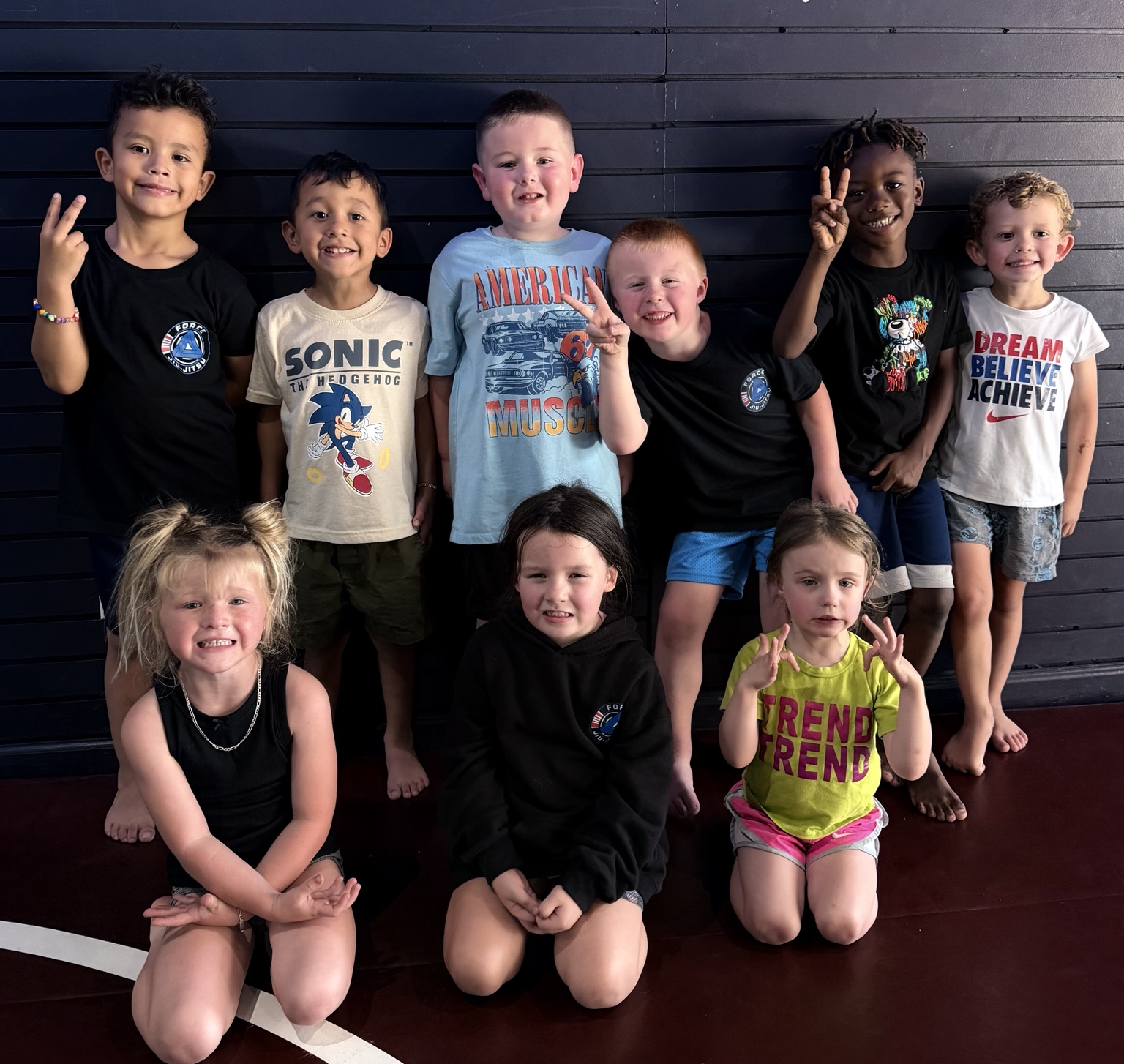
Younglings Jiu-Jitsu uses movement, structure, and play to build the habits that make future learning possible.
The goal is not to create tiny competitors.
Four- and five-year-olds are learning how to participate before they are learning how to perform. A good early-childhood class builds comfort with a coach, a partner, boundaries, and the idea that effort can be fun.
That is why Younglings is short, active, and age-appropriate. Grappling movements are introduced through simple games and repeatable routines. The technical seeds are real, but the deeper work is learning to listen, take turns, and finish a task.
Confidence needs evidence.
Telling a child to be confident is less powerful than giving them a manageable challenge and letting them experience success. A completed warm-up, a new movement, or a brave attempt with a partner becomes evidence they can use the next time something feels unfamiliar.
Coaches create that evidence by setting clear expectations, noticing effort, and allowing children to solve small problems instead of rescuing them from every moment of difficulty.
- Body awareness and coordination
- Listening and following directions
- Taking turns with a partner
- A positive relationship with physical activity
Parents are part of the process.
The most helpful question after class is not, ‘Did you win?’ Ask what they learned, who they helped, or what felt hard. Praise brave effort and consistency more than perfect behavior.
The goal is a child who associates the mat with learning, connection, and the pride of doing something they could not do before.